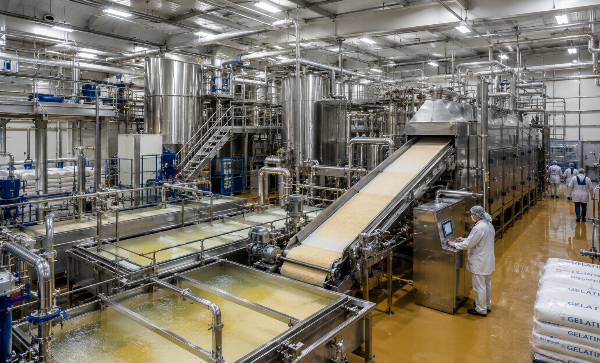
Gelatine is an animal-derived, pure collagenous protein. In Europe, most of it comes from pigs, though beef, cattle, and fish are also common sources. Whatever the source, quality gelatine starts with high-quality animal materials and a tightly controlled production process.
Sourcing High-Quality Materials
Raw animal material is carefully selected to meet strict safety and quality standards. Manufacturers source materials from healthy pigs, cattle, chicken, and fish, and all gelatine intended for food use in Europe and the UK must comply with ISO standards or equivalent high-level food safety requirements. As a result, the gelatine industry is regarded as one of the best-controlled and best-structured industrial sectors in Europe.
Comprehensive statutory provisions in Europe and the UK regulate animal slaughter, backed by licensing and control procedures overseen by government agencies. Raw materials are routinely inspected for both safety and origin, and only animals from licensed slaughterhouses that have passed veterinary examination are used. Every animal material used in gelatine production is approved for human consumption — meaning gelatine is just as safe as the meat itself — and its sourcing and manufacture are governed by food law.
In Europe, roughly 80% of edible gelatine is produced from pig skins, 15% comes from the thin, collagen-rich layer between the epidermis and subcutaneous tissue of cattle hide, and the remaining 5% comes from pig, chicken, and cattle bones, as well as fish.
The Production Process
Turning raw connective tissue and bone into gelatine is a complex, multi-stage process that relies on specialized industrial equipment. The collagenous protein is extracted from pig, cattle, or fish tissue and refined into a pure, high-grade protein.
Two Pre-Treatment Methods
1.Alkaline process — used for dense bovine connective tissue. The material is soaked in an alkaline solution for several weeks, gradually altering the collagen structure so it becomes soluble in warm water and can be separated from the rest of the raw material.
2.Acid process — used for non-bovine connective tissue, where a one-day acid treatment is enough to make collagen extraction possible.
From Pre-Treatment to Finished Gelatine
Once the raw material has been pre-treated by either method, it moves through four further stages:
1.Extraction — The pre-treated material is combined with hot drinking water and extracted across multiple stages. Water temperature plays a key role here: the cooler the water, the higher the resulting gel strength, or Bloom value.
2.Purification — High-performance separators strip out fat and fine fibres from the extracted solution, followed by filtration to remove the finest remaining particles. A final purification step clears away calcium, sodium, residual acid, and other salts.
3.Thickening — The solution is concentrated using vacuum evaporation until it takes on a honey-like consistency.
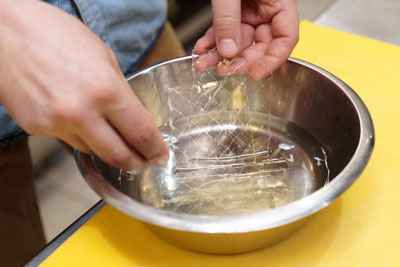
4.Drying — The concentrated gelatine is sterilized, cooled, set, and dried under strict hygienic conditions, producing "jelly noodles" that are then ground into grains once fully dry.
Throughout every stage, extensive laboratory-grade quality checks ensure the gelatine's purity and consistency.