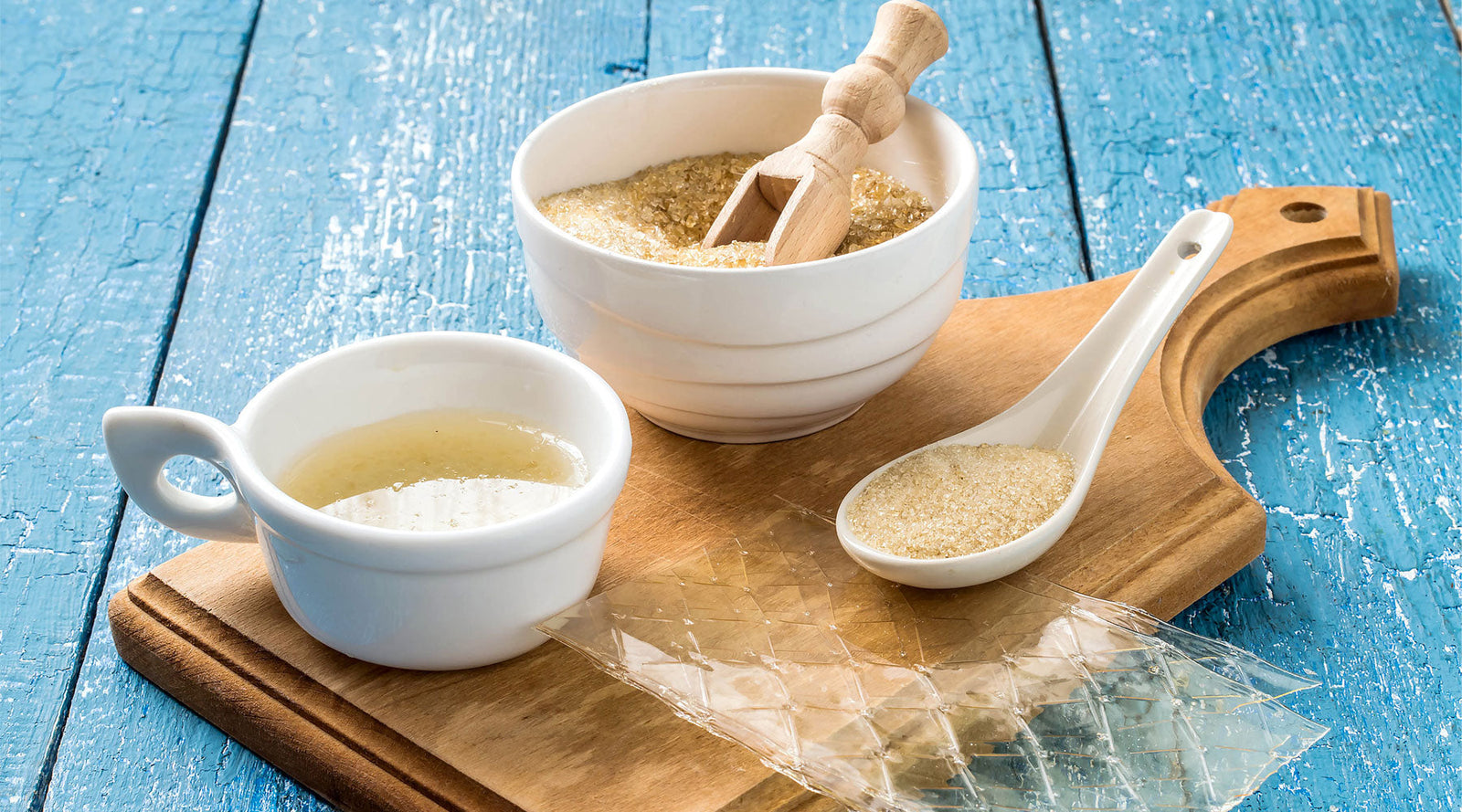
They are essentially two different forms of the same thing, but they need to be treated differently when you use them, and, because they can each result in slightly different outcomes in a dish, a particular recipe may recommend one type over the other
Firmer set, can be used to produce a more ‘chewy’ texture if required
Clarity
Highly transparent
Used when high clarity is less important
Can I swap Gelatine Powder for Gelatine Sheets in a recipe?
If a recipe recommends using either sheet or powdered Gelatine, then we would suggest that you stick with that option. It is possible to substitute one for the other, but the final outcome may not always be exactly the same.
Some sources may suggest conversion ratios, but be aware that these do not always work well.
For a start, Gelatine sheets absorb less liquid than the powder, which can make a difference in a recipe.
It is also necessary to remember that there are different strengths (measured in a unit called ‘bloom’) of Gelatine, whether you are using sheets (leaves) or powder, and so it’s not as simple as taking ‘a Gelatine sheet’ and converting that into spoons of ‘a Gelatine powder’.
The best thing to do is to decide on your source of gelatine, after checking the recipe, and then start to work with it. As you use it you will be able to understand how it works, and how things like the ambient temperature affect the gelling process. You can then make small adjustments as you go, and if you end up with a product that is too soft, or too chewy, then change the gelatine proportion the next time.